Best trek in Everest region

Gokyo Valley Trek

Overview

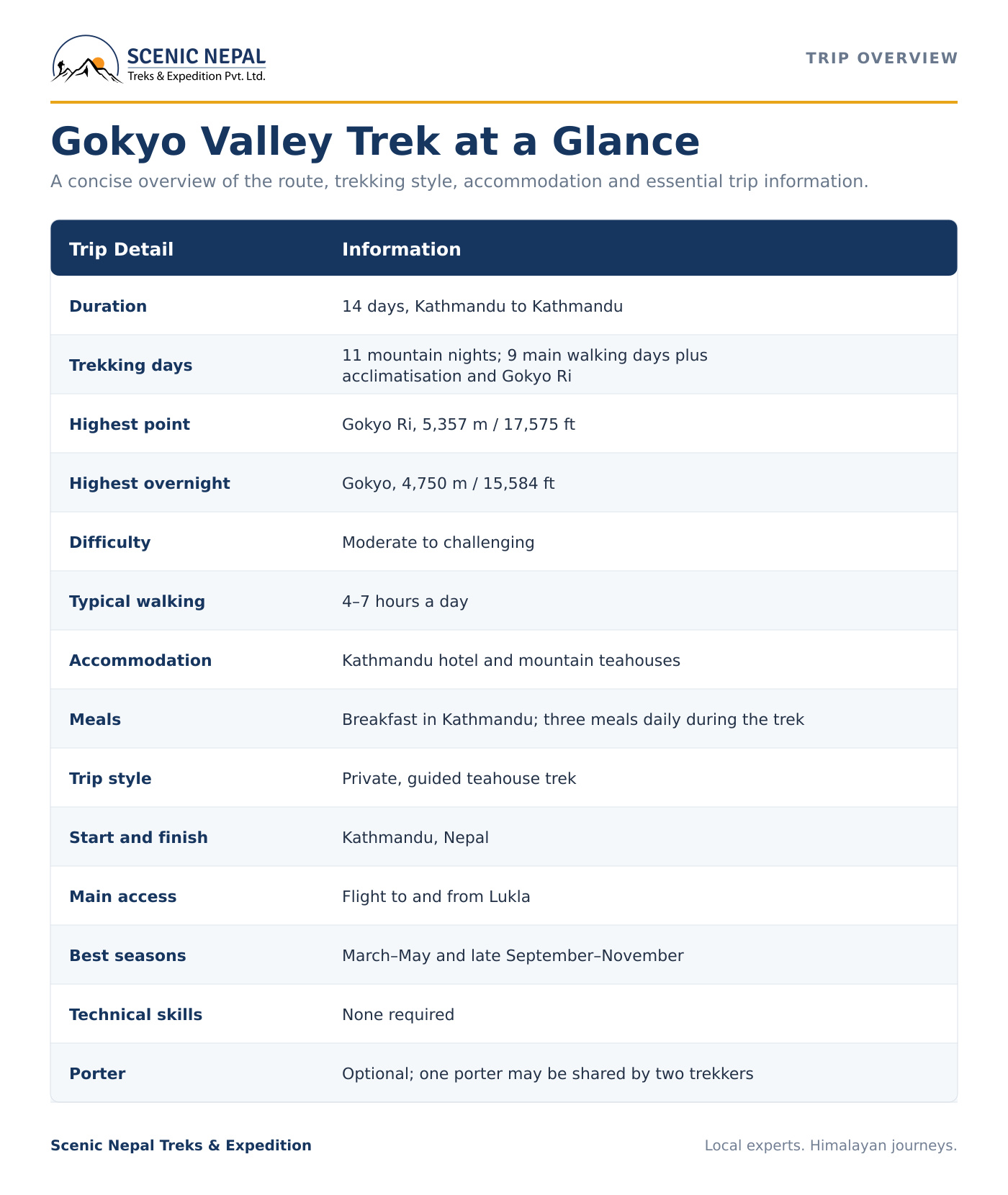
  • Duration14 Days
  • Trip GradeModerate
  • Max Altitude 5,483m/17,984ft
  • Arrival CityKathmandu
  • Trip TypePrivate
  • Best TimeMarch to June & September to December

Highlights

  • Experience the scenic and adventurous flight from Kathmandu to Lukla and back.
  • Avoid the Everest crowds from enjoying the virtue of the Himalayas.
  • Enjoy the gleaming blue water of the five Gokyo Lakes.
  • Walk past the emerald lakes resting in tranquility.
  • The peaceful Gokyo Valley.
  • Sunrise view from Gokyo Ri.
  • Witness Himalayan scenes of Mt. Everest, Mt. Lhotse, Mt. Makalu, Mt. Choyu, etc.
  • Surprise your sights with magnificent views of Everest from Gokyo Ri.
  • Marvel the impressive Ngozumpa glacier.
  • Dive yourself into hospitable Sherpa Culture.

Gokyo Valley Trek – Complete Guide to Nepal’s Iconic High-Altitude Lakes

The Gokyo Valley Trek is one of the most rewarding journeys in the Nepal Himalayas, offering a quieter yet equally spectacular alternative to the classic Everest Base Camp Trek. Located in the heart of the Khumbu region, this trek takes you deep into Sagarmatha National Park (UNESCO), home to dramatic glaciers, traditional Sherpa villages, and some of the world’s most stunning alpine scenery.

The highlight of the trek is the pristine Gokyo Lakes, a chain of turquoise, high-altitude lakes set beneath towering Himalayan peaks. A climb to Gokyo Ri (5,357 m) rewards trekkers with breathtaking panoramic views, including Mount Everest (8,848.86 m), Cho Oyu, Lhotse, and Makalu—an unforgettable moment that defines the journey.

What makes the Gokyo Valley special is its perfect balance of natural beauty, cultural depth, and fewer crowds. For trekkers seeking iconic Everest views, serene landscapes, and a more peaceful trail experience, the Gokyo Valley Trek stands out as a truly exceptional Himalayan adventure.

Overview of the Gokyo Valley Trek

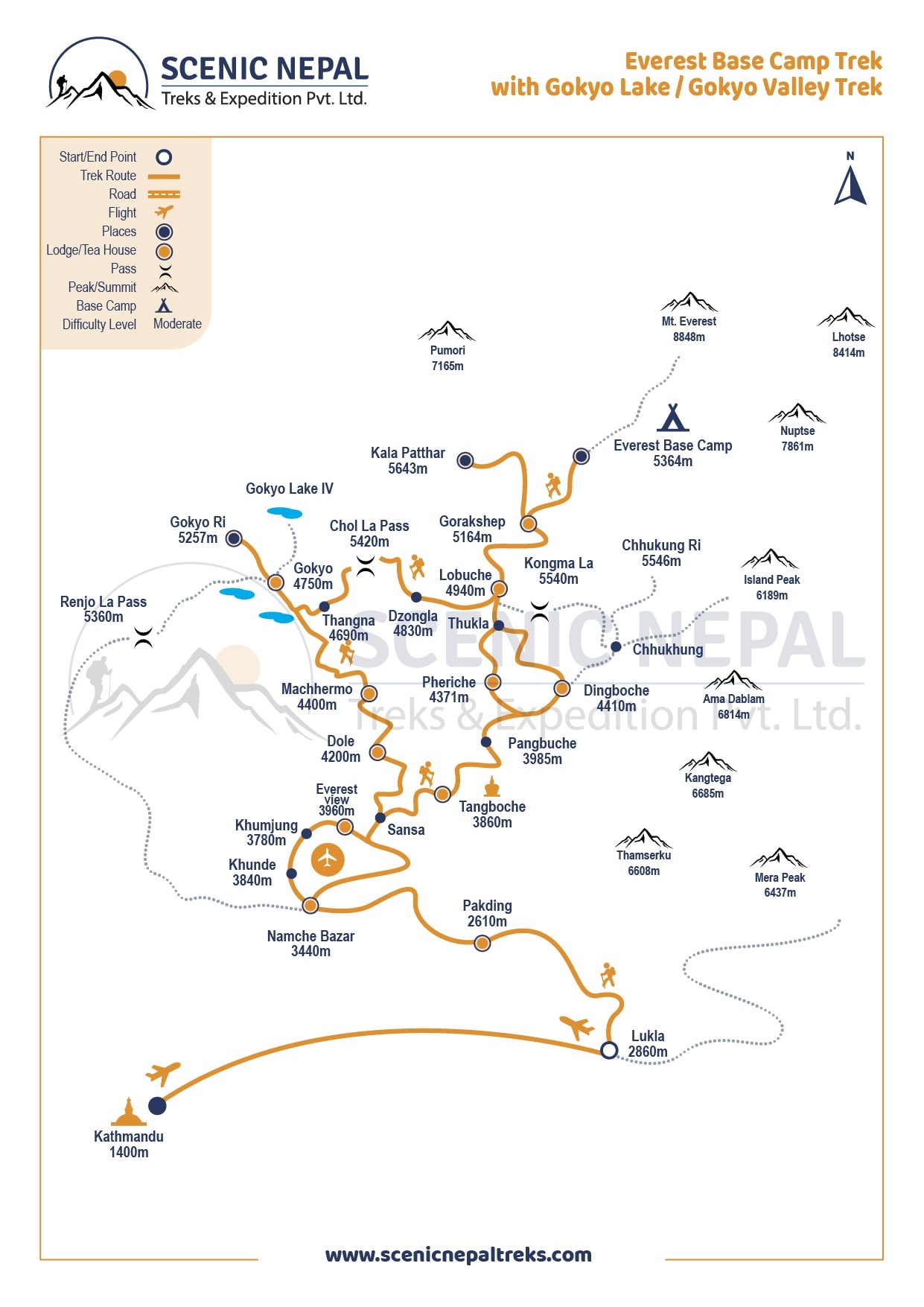
The Gokyo Valley Trek is a scenic high-altitude trek in Nepal that leads trekkers into the less-crowded western side of the Everest region. Instead of heading directly toward Everest Base Camp, the trail follows the Dudh Koshi River, passing through traditional Sherpa villages, ancient monasteries, and vast alpine landscapes before reaching the stunning Gokyo Valley and its famous lakes. The trek sits within Sagarmatha National Park and is known for its blend of natural beauty, cultural immersion, and dramatic mountain views.

What sets the Gokyo Valley Trek apart from the Everest Base Camp Trek is its quieter route and different visual highlights. While Everest Base Camp focuses on the Khumbu Glacier and the foot of Mount Everest, Gokyo emphasizes serene turquoise lakes, expansive glacier systems, and panoramic viewpoints like Gokyo Ri. Many trekkers consider the views from Gokyo Ri to be among the best in the entire Everest region, often with fewer crowds than the classic EBC viewpoint. For a detailed comparison, see the Everest Base Camp Trek.

This trek is ideal for hikers who want Everest-region scenery without the busiest trails. It suits trekkers who value peaceful walking days, photography, and a deeper connection with nature, while still experiencing authentic Sherpa culture along the way. It’s also popular with return visitors to the Khumbu who want something different from the standard route.

In terms of difficulty, the Gokyo Valley Trek is considered moderately challenging. It requires good fitness, steady acclimatization, and comfort with multi-day trekking at altitude, but no technical climbing skills—making it accessible to well-prepared trekkers seeking a rewarding Himalayan experience.

Why Choose the Gokyo Valley Trek Over Other Everest Region Treks

Choosing the right trek in the Everest region can shape your entire Himalayan experience. The Gokyo Valley Trek stands out for trekkers who want iconic mountain scenery without the intensity of crowds found on more popular routes. While all Everest region treks offer dramatic landscapes, Gokyo delivers a rare combination of solitude, diversity, and exceptional viewpoints.

One of the biggest reasons to choose Gokyo is fewer crowds than the Everest Base Camp (EBC) route. After Namche Bazaar, the trail splits, and far fewer trekkers head toward Gokyo Valley. This means quieter teahouses, more peaceful trails, and a stronger connection with nature and local Sherpa culture.

The trek is also known for its panoramic Himalayan views. From high ridges and viewpoints, trekkers enjoy sweeping vistas of Everest, Cho Oyu (8,188 m), Lhotse, and Makalu—often from a single location. The presence of multiple turquoise glacial lakes, collectively known as the Gokyo Lakes, adds a visual element not found on other Everest region routes.

A major highlight is the unique ascent of Gokyo Ri, which many consider one of the best viewpoints in the Khumbu. For adventurous trekkers, the route can be extended by crossing the Cho La Pass, linking Gokyo Valley with the Everest Base Camp trail and creating a more challenging circuit-style trek.

If you’re comparing routes or exploring alternatives, see our guide to Everest Region Treks in Nepal for a broader overview.

Gokyo Valley vs Everest Base Camp Trek

The main difference between the Gokyo Valley Trek and the Everest Base Camp Trek lies in experience rather than difficulty. EBC focuses on reaching a legendary destination, following a busy trail lined with trekkers from around the world. In contrast, Gokyo emphasizes scenic variety—lakes, glaciers, and wide-open valleys—with significantly less foot traffic.

While EBC offers close-up views of the Khumbu Glacier and Everest Base Camp itself, Gokyo rewards trekkers with elevated panoramic viewpoints. The trek circles the massive Ngozumpa Glacier, the largest glacier in Nepal, creating a sense of scale that feels wilder and more remote. For trekkers who prioritize scenery and tranquility over ticking off a famous endpoint, Gokyo is often the preferred choice.

Scenic Highlights Unique to Gokyo

What truly makes Gokyo special is its concentration of natural highlights. The vivid Gokyo Lakes contrast sharply with the surrounding alpine terrain, changing color with light and weather. The trail alongside the Ngozumpa Glacier offers dramatic ice formations rarely seen up close on other treks.

From the summit of Gokyo Ri, trekkers are treated to one of the most comprehensive mountain panoramas in Nepal—Everest, Cho Oyu, Lhotse, and Makalu rising above a sea of peaks and glaciers. These scenic elements combine to make the Gokyo Valley Trek one of the most visually rewarding journeys in the Everest region.

Itinerary

Expand all +Collapse all -

Upon arrival at Tribhuvan International Airport, Kathmandu, our representative from Scenic Nepal Treks will meet and greet you with Garland and transfer you to your hotel. Take time to rest and recover from your international flight.

In the evening, you will have a short briefing about your trek, including permits, packing tips, and safety guidelines. You may also explore Thamel, the bustling tourist hub of Kathmandu, for local crafts and trekking gear.


  • Accommodation Hotel
  • MealsNone
  • Maximum Altitude1,400 m / 4,593 ft

An early morning flight to Lukla Airport (2,860 m / 9,383 ft) begins your Everest region adventure. Lukla, with its dramatic runway perched on a hillside, provides breathtaking views of the surrounding peaks and valleys.

From Lukla, trek along the Dudh Koshi River to Phakding (2,610 m / 8,563 ft). This 3–4 hour gentle hike is a great introduction to trekking, passing through pine forests, suspension bridges, and charming villages.

Trek distance: 8 km / 5 miles
Trek duration: 3–4 hours
Overnight: Tea house in Phakding

  • Accommodation Tea House
  • MealsBreakfast, Lunch, Dinner
  • Maximum Altitude(2,610 m / 8,563 ft)

Today’s trek takes you to Namche Bazaar (3,440 m / 11,286 ft), the main Sherpa trading town in the Khumbu region. The trail is 10 km / 6 miles and takes 6–7 hours, passing through rhododendron forests, cascading waterfalls, and several suspension bridges over the Dudh Koshi River.

Namche Bazaar is a lively town with shops, cafes, and stunning Himalayan panoramas. With the significant altitude gain, take regular breaks to acclimatize.

Trek distance: 10 km / 6 miles
Trek duration: 5-7 hours

Overnight at Tea house in Namche Bazaar

  • Accommodation Tea House
  • MealsBreakfast, Lunch, Dinner
  • Maximum Altitude(3,440 m / 11,286 ft)

Acclimatization is crucial to prevent altitude sickness. Today, enjoy a rest day or take short hikes to nearby viewpoints such as Namche Hill, which offers panoramic views of Mount Everest, Lhotse, and Ama Dablam.

You can also visit the Sherpa Culture Museum or explore the local market. Staying hydrated and eating well will help your body adapt to higher elevations.

Overnight: Tea house in Namche Bazaar

  • Accommodation Tea House
  • MealsBreakfast, Lunch, Dinner
  • Maximum Altitude(3,440 m / 11,286 ft)

After breakfast in Namche Bazaar, begin your trek towards Dole (4,030 m / 13,222 ft) which is going to be about 7km, a quiet village tucked in the high Khumbu region. The trail climbs gradually through mixed forests of pine and rhododendron before opening up to sweeping alpine meadows. Along the way, you’ll pass traditional Sherpa villages where stone houses and prayer flags add to the cultural charm of the region.

The hike takes around 5–6 hours, giving you ample time to pause for photos, short breaks, and to enjoy the stunning views of Thamserku, Kongde Ri, and other nearby peaks. As you gain altitude, the landscape transitions from lush greenery to sparse vegetation, signaling your approach to high-altitude terrain.

Dole is a small settlement with cozy tea houses, offering panoramic views of the surrounding mountains. This stop is perfect to rest and prepare your body for the next day’s ascent.

Day 5 Trek Distance: 8 km / 5 miles

Trek duration: 5-7 hours

  • Accommodation Tea House Lodge
  • MealsBreakfast, Lunch, Dinner
  • Maximum Altitude(4,030 m / 13,222 ft)

After an early breakfast, continue your trek deeper into the Gokyo Valley. Today’s hike to Machhermo is a gradual ascent, taking about 4–5 hours. The trail winds along high ridges and moraine slopes, offering uninterrupted views of the Ngozumpa Glacier, the largest glacier in Nepal, and the surrounding Himalayan peaks.

Machhermo is a small, peaceful settlement that serves as a high-altitude acclimatization stop before reaching the Gokyo Lakes. The village sits beside rocky terrain and small streams, with tea houses providing a warm welcome and hearty meals. This is an ideal place to adjust to the altitude, rest, and prepare for the challenging yet rewarding trek to Gokyo Village the following day.

The trail is not very long, but the high altitude makes pacing important. Take regular short breaks, stay hydrated, and enjoy the serene beauty of the Khumbu region.

Trek distance: 6 km / 4 miles

  • Accommodation Tea House Lodge
  • MealsBreakfast, Lunch, Dinner
  • Maximum Altitude(4,470 m / 14,665 ft)

From Machhermo, continue to the Gokyo Valley, arriving at Gokyo Village (4,750 m / 15,584 ft) in 4–5 hours. This village sits beside the turquoise Gokyo Lakes, one of the most picturesque spots in the Khumbu region.

Along the trail, cross moraines and enjoy panoramic views of Cho Oyu and Ngozumpa Glacier, the largest glacier in Nepal. Upon arrival, explore the lakes and the serene village, which is quieter than Namche Bazaar but equally charming.

Trek distance: 8 km / 5 miles
Trek duration: 4–5 hours

  • Accommodation Tea House Lodge
  • MealsBreakfast, Lunch, Dinner
  • Maximum Altitude(4,750 m / 15,584 ft)

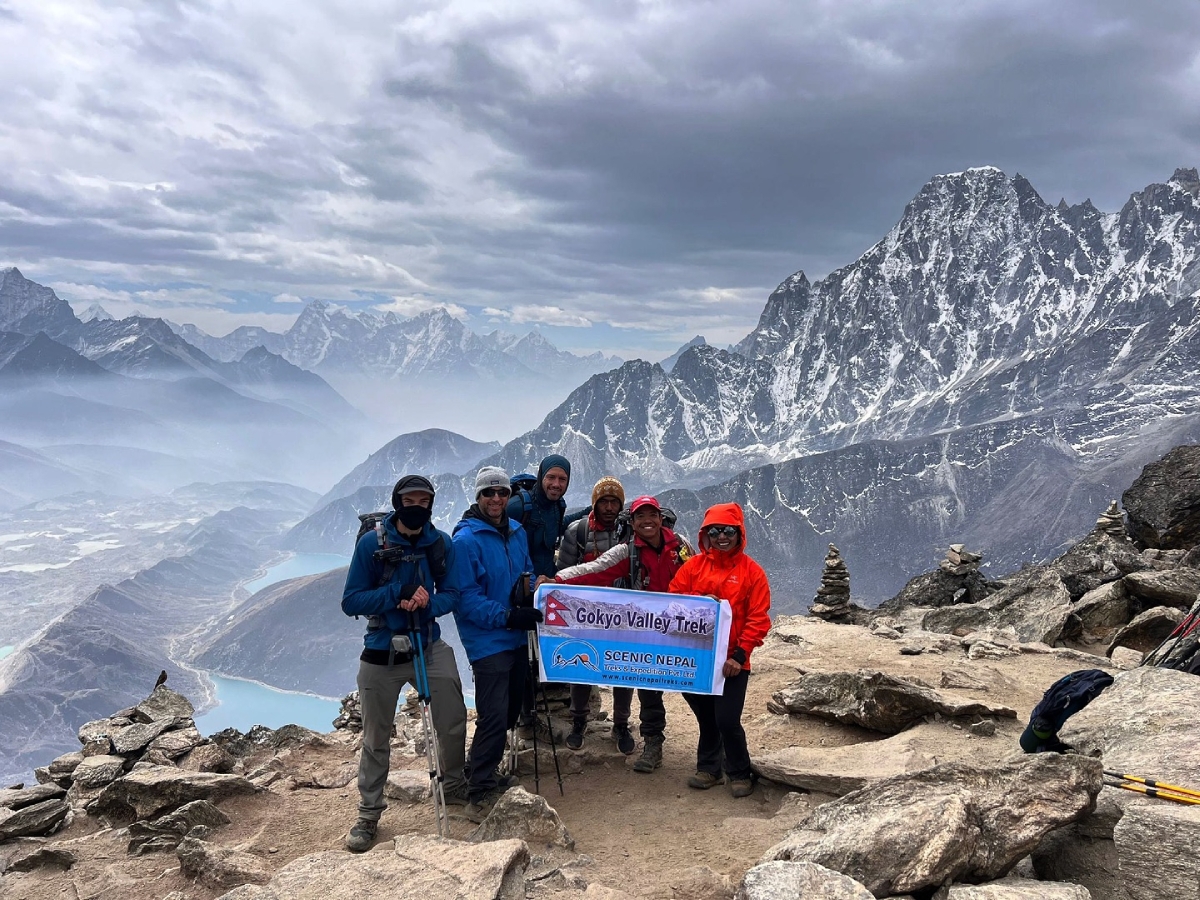
Wake up early for the challenging but rewarding hike to Gokyo Ri (5,357 m / 17,575 ft). The climb takes 3–4 hours and offers arguably the best panoramic views of Everest, Lhotse, Makalu, and Cho Oyu. Sunrise from Gokyo Ri is a photographer’s dream.

After taking in the views, descend back to Gokyo Village and enjoy a relaxing evening by the lakes.

Hike distance: 8 km / 5 miles round trip
Overnight: Tea house in Gokyo Village

  • Accommodation Tea House Lodge
  • MealsBreakfast, Lunch, Dinner
  • Maximum Altitude(5,357 m / 17,575 ft)

Retrace your steps from Gokyo to Dole, descending along the same trail. This 4–5 hour trek is easier than previous days, offering an opportunity to enjoy the scenery at a relaxed pace.

Trek distance: 10 km / 6 miles
Overnight: Tea house in Dole
Meals: Breakfast, Lunch, Dinner

  • Accommodation Tea House Lodge
  • MealsBreakfast, Lunch, Dinner
  • Maximum Altitude(4,030 m / 13,222 ft)

Trek from Dole to Khumjung Village (3,780 m / 12,402 ft), one of the most famous Sherpa villages in the region, known for its Himalayan School and the Yeti scalp at the monastery. The trail descends gently through forests and small settlements, taking around 5–6 hours.

Trek distance: 12 km / 7.5 miles
Overnight: Tea house in Khumjung
Meals: Breakfast, Lunch, Dinner

  • Accommodation Tea House Lodge
  • MealsBreakfast, Lunch, Dinner
  • Maximum Altitude(3,780 m / 12,402 ft)

From Khumjung, descend through forests and villages to Monjo (2,835 m / 9,301 ft). This 5–6 hour trek takes you back to the lower Khumbu region, passing through Namche Bazaar outskirts and rhododendron forests. Monjo is the gateway to Sagarmatha National Park.

Trek distance: 12 km / 7.5 miles
Overnight: Tea house in Monjo

  • Accommodation Tea House Lodge
  • MealsBreakfast, Lunch, Dinner
  • Maximum Altitude(2,835 m / 9,301 ft)

The final trekking day takes you from Monjo to Lukla (2,860 m / 9,383 ft). This 6–7 hour hike descends along the Dudh Koshi River, passing local villages and suspension bridges for one last look at the Everest region’s stunning landscapes.

Enjoy your last evening in Mountain. 

Trek distance: 14 km / 8.7 miles
Meals: Breakfast, Lunch, Dinner

  • Accommodation Tea house Lodge
  • MealsBreakfast, Lunch, Dinner
  • Maximum Altitude(2,860 m / 9,383 ft)

Enjoy a scenic morning flight back to Kathmandu from Lukla. Depending on your arrival time, you can rest at your hotel or explore the city’s cultural and historical highlights. This is also the perfect opportunity to shop for souvenirs and trekking mementos.
Meals: Breakfast, Lunch optional


  • Accommodation Hotel
  • MealsBreakfast, Dinner
  • Maximum Altitude1,400 m / 4,593 ft

After breakfast, you will be transferred to Tribhuvan International Airport for your onward flight. The memories of Gokyo Valley, its turquoise lakes, towering peaks, and Sherpa culture will stay with you forever.

Meals: Breakfast included

  • Accommodation None
  • MealsBreakfast
  • Maximum AltitudeNA
Not satisfied with this itinerary?

The Gokyo Valley Trek is one of the most stunning treks in the Everest region, combining majestic Himalayan peaks, turquoise glacial lakes, and rich Sherpa culture. This detailed itinerary guides you through the journey from Kathmandu to Gokyo and back, providing clarity on trekking logistics, acclimatization, and scenic highlights.

Plan your trip

What’s Included

Included

  • Airport Pick up and Drop by Private Vehicles
  • 2 Night Hotel Accommodation with Breakfast in Kathmandu
  • 11 Nights Twin sharing Mountain Tea House / Lodge 
  • All the necessary trekking permits 
  • Highly Experienced English Speaking Sherpa Guide  and his expenses 
  • Your Three Meals each day during the Trek as per  menu 
  • Kathmandu - Lukla - Kathmandu Airfare 
  • Sleeping Bags & Duffel Bag during the trek ( If you are having Porter then, better to take Duffel Bag) 
  • First Aid medicine kit box (Medicines are recommended to have your own.)
  • Trekking Map and Trekking Achievement Certificate
  • Government Taxes

Excluded

  • Early Arrival or Late departure Accommodations in Kathmandu and Mountain due to Flight delay or cancellation
  • Personal Travel/Trekking insurance
  • International airfare
  • Nepal entry visa. You can obtain a visa easily upon your arrival at Tribhuwan International Airport in Kathmandu. A multiple-entry tourist visa good for 30 days can be obtained by paying US$ 40 or equivalent in foreign currency. Similarly, multiple-entry tourist visas for 90 days can be obtained by paying US$ 100. Please bring 2 passport-size photos.
  • Soft drinks including Water, Your Tea & Coffee during the Trek 
  • Snacks and other personal expenses
  • Personal trekking equipment
  • Wi-Fi internet and phone call unless it’s free.
  • Porter to Carry your Bags ( US$ 290 for a Porter- 1 porter can be shared by Two People)
  • Single room in the mountain
  • Tips and gratuities for trekking staff and drivers

Useful Info

Gokyo Ri Hike – Best Viewpoint in the Everest Region

Standing tall above the turquoise Gokyo Lakes, Gokyo Ri (5,357 m / 17,575 ft) is widely regarded as the best viewpoint in the Everest region. Unlike the busier Everest Base Camp route, this hike rewards trekkers with quieter trails and one of the most complete Himalayan panoramas in Nepal.

Elevation & Hike Duration:

The hike to Gokyo Ri starts from Gokyo Village and typically takes 3–4 hours to ascend and around 2 hours to descend. Although the trail is non-technical, the steep incline and high altitude make it physically demanding. A slow, steady pace is key, especially above 5,000 meters, where the air is thin and every step feels heavier.

Sunrise vs Sunset Hike:

A sunrise hike is the most popular choice—and for good reason. As the first light touches the Himalayas, the peaks glow in shades of gold and pink, creating unforgettable Himalayan sunrise views. Sunrise also offers clearer weather conditions.
A sunset hike, while less common, is quieter and equally dramatic, with warm evening light casting long shadows across glaciers and valleys. However, afternoon clouds are more likely, so timing is crucial.

360-Degree Mountain Views:

From the summit, you are rewarded with a breathtaking 360-degree panorama featuring four of the world’s highest mountains: Everest, Lhotse, Makalu, and Cho Oyu. Below, the vast Ngozumpa Glacier snakes through the valley, while the emerald-blue Gokyo Lakes shimmer far beneath your feet.

For trekkers seeking the ultimate Himalayan viewpoint without the crowds, Gokyo Ri truly stands unmatched.

Gokyo Lakes – Sacred High-Altitude Lakes of Nepal

Hidden deep in the Everest region, the Gokyo Lakes are among the most beautiful and spiritually significant high-altitude lakes in the Himalayas. Their striking turquoise color, set against snow-covered peaks and glacial moraines, creates a landscape that feels almost otherworldly. Beyond their visual beauty, the lakes hold deep religious meaning and ecological importance, making them a truly special destination for trekkers.

Number and Names of Gokyo Lakes

The Gokyo Lake system consists of six major glacial lakes, collectively known as the Six Gokyo Lakes. These lakes are aligned along the Ngozumpa Glacier and increase in size and altitude as you move deeper into the valley.

The six lakes are:

  1. Longpongo Tsho (the first lake)
  2. Taujung Tsho
  3. Gokyo Tsho (Dudh Pokhari) – the largest and most famous
  4. Thonak Tsho
  5. Ngozumpa Tsho
  6. Gyazumpa Tsho

Among them, Gokyo Tsho (Dudh Pokhari) lies beside Gokyo Village and is the most visited, reflecting the surrounding peaks like a mirror on calm days. These lakes are considered the highest freshwater lake system in the world.

Religious and Cultural Significance

The Gokyo Lakes are sacred to both Hindu and Buddhist beliefs. Hindus believe the lakes are the dwelling place of Lord Vishnu, and during the festival of Janai Purnima, pilgrims travel from far and wide to bathe in the icy waters as a form of spiritual purification. Buddhists regard the area as spiritually powerful, surrounded by mountains considered protectors of the land.

In recognition of their ecological value, the Gokyo Lakes are designated as high-altitude wetlands under the Ramsar Convention, highlighting their importance for biodiversity and conservation.

Visiting the Gokyo Lakes is not just a trek—it is a journey through sacred nature, ancient beliefs, and timeless Himalayan beauty.

Best Time to Do the Gokyo Valley Trek

Choosing the right season is crucial for a safe and enjoyable Gokyo Valley Trek. Weather, visibility, trail conditions, and even the overall trekking experience can vary greatly throughout the year. Understanding Nepal trekking seasons will help you plan the perfect journey to this spectacular Himalayan destination.

Spring (March–May)

Spring is one of the best times to trek in the Gokyo Valley. As winter fades, temperatures become milder and the trails come alive with blooming rhododendron forests, especially at lower elevations around Namche and Dole. Days are generally warm, while nights remain cool at higher altitudes.

This season offers clear mountain visibility, making it ideal for panoramic views from Gokyo Ri. Snow may still be present at higher elevations in early spring, adding dramatic contrast to the landscape without significantly affecting the trail. Spring is also slightly less crowded than autumn, offering a more peaceful trekking experience.

Autumn (September–November)

Autumn is widely considered the peak trekking season in Nepal. Following the monsoon, the air is crisp and clean, delivering exceptional clear mountain visibility. Skies are typically deep blue, and views of Everest, Cho Oyu, Lhotse, and Makalu are at their best.

Trail conditions are stable and dry, and temperatures are comfortable during the day. However, autumn is also the busiest season, especially around Namche Bazaar and Lukla. Advance bookings for flights and tea houses are highly recommended during this period.

Winter & Monsoon Considerations

Winter (December–February) offers fewer crowds and dramatic snowy landscapes, but temperatures can drop well below freezing, especially around Gokyo Village. Some tea houses may close due to heavy snowfall.

Monsoon (June–August) brings rain, clouds, and flight delays to Lukla, limiting visibility and increasing trail risks. While trekking is possible, these months are generally not recommended for first-time trekkers.

For the best balance of weather, scenery, and safety, spring and autumn remain the ideal seasons for the Gokyo Valley Trek.

Gokyo Valley Trek Difficulty & Fitness Requirements

The Gokyo Valley Trek is considered a moderate to moderately challenging high-altitude trekking adventure. While it does not require technical climbing skills, it does demand good physical preparation, mental endurance, and proper acclimatization. Understanding the difficulty level in advance helps reduce anxiety and sets realistic expectations for trekkers.

Altitude Challenges

The biggest challenge of the Gokyo Valley Trek is altitude. The trail gradually climbs above 4,000 meters, with Gokyo Village at 4,750 m and the optional hike to Gokyo Ri at 5,357 m. At these elevations, the risk of altitude sickness (AMS) increases. Common symptoms include headaches, fatigue, and shortness of breath. A well-planned itinerary with built-in acclimatization days, especially in Namche Bazaar and Machhermo, is essential for safety.

Daily Walking Hours

Trekkers typically walk 4 to 7 hours per day, depending on the route and altitude. The pace is slow and steady, allowing time for rest breaks, hydration, and photography. While distances may seem short, walking at high altitude makes each hour more demanding than at lower elevations.

Required Fitness Level

A moderate fitness level is sufficient for this trek. Regular cardio activities such as hiking, cycling, swimming, or stair climbing before the trek will greatly improve endurance. Strong legs and basic core strength help with long ascents and descents.

Beginner vs Experienced Trekkers

The Gokyo Valley Trek is suitable for fit beginners who prepare well and follow a gradual ascent schedule. Experienced trekkers will find it less crowded and more scenic than the Everest Base Camp route, with added rewards from high viewpoints and glacial landscapes.

With proper preparation, pacing, and acclimatization, the Gokyo Valley Trek is a challenging yet achievable Himalayan adventure.

Permits Required for Gokyo Valley Trek

Before starting the Gokyo Valley Trek, trekkers must obtain specific permits that allow legal access to the Everest region. These permits are mandatory and are checked at several points along the trail, so arranging them in advance is essential for a smooth journey.

The first required permit is the Sagarmatha National Park Permit. This permit allows entry into Sagarmatha National Park, a UNESCO World Heritage Site that protects the fragile Himalayan ecosystem, wildlife, and cultural heritage of the Everest region. It is usually checked at Monjo, the main park entry point.

The second mandatory permit is the Khumbu Pasang Lhamu Rural Municipality Permit. This local government permit replaced the TIMS system for the Everest region and supports trail maintenance, local infrastructure, and community development. It is checked at Lukla and other checkpoints within the Khumbu area.

The TIMS (Trekkers’ Information Management System) card is not required for the Gokyo Valley Trek when trekking in the Everest region, but it is still relevant in other parts of Nepal.

Most trekking agencies arrange all required permits in Kathmandu, allowing trekkers to focus on preparation rather than paperwork. Having these permits ensures legal access, safety monitoring, and responsible trekking in one of Nepal’s most iconic regions.

Accommodation & Food on the Gokyo Valley Trek

Accommodation and meals on the Gokyo Valley Trek are simple yet comfortable, offering trekkers a warm and authentic Himalayan experience. The well-established trail ensures reliable teahouses, nourishing food, and welcoming local hosts throughout the journey.

Teahouse Accommodation

The trek is fully supported by teahouses, which are family-run lodges found in villages like Namche Bazaar, Dole, Machhermo, and Gokyo Village. Rooms are typically twin-sharing with basic wooden beds, mattresses, pillows, and warm blankets. Bathrooms may be shared, especially at higher altitudes, and hot showers are often available for an extra cost.

As you gain elevation, facilities become more basic, but the warmth of Sherpa hospitality more than makes up for the simplicity. Most teahouses have a cozy dining area heated by a stove in the evenings, creating a social atmosphere where trekkers can relax, share stories, and enjoy mountain views after a long day on the trail.

Meals and Drinking Water

Teahouse menus offer a surprising variety of meals, including Nepali, Tibetan, and simple Western dishes. The most popular and reliable option is Dal Bhat, a traditional Nepali meal of rice, lentil soup, vegetables, and pickles—nutritious, filling, and often served with unlimited refills. Other common options include noodles, soups, fried rice, momos, eggs, and porridge.

Drinking water is available for purchase at teahouses or from natural sources treated with purification tablets or filters. Using refillable bottles is encouraged to reduce plastic waste.

Overall, food and accommodation on the Gokyo Valley Trek provide comfort, safety, and a genuine cultural experience in the heart of the Himalayas.

Packing List for Gokyo Valley Trek

Packing smart is essential for a safe, comfortable, and enjoyable Gokyo Valley Trek. Weather conditions change rapidly in the Himalayas, and proper gear helps you stay warm, dry, and prepared at high altitude. Below is a practical packing guide focused on safety and efficiency.

Clothing & Footwear

  • Moisture-wicking base layers (tops & bottoms)
  • Insulating mid-layers (fleece or wool)
  • Waterproof and windproof jacket and pants
  • Down jacket for high-altitude warmth
  • Trekking pants
  • Thermal underwear
  • Warm socks (several pairs)
  • Gloves and wool hat
  • Sun hat or cap
  • Sturdy, broken-in trekking boots
  • Lightweight sandals or shoes for teahouse use

Trekking & Safety Gear

  • Comfortable backpack or daypack
  • Sleeping bag (-10°C to -15°C)
  • Trekking poles
  • Headlamp with spare batteries
  • Sunglasses with UV protection
  • Sunscreen and lip balm

Health, Hygiene & Essentials

  • Personal toiletries and wet wipes
  • Quick-dry towel
  • Hand sanitizer
  • Basic first-aid kit (pain relievers, blister treatment, rehydration salts)
  • Altitude medicine (Diamox) – consult your doctor before use
  • Reusable water bottle with purification tablets or filter

Why Book the Gokyo Valley Trek With Us

Choosing the right trekking company can make all the difference in your Gokyo Valley adventure. We offer an experience that combines safety, comfort, and authentic local insights, ensuring your trek is both memorable and hassle-free.

Our team consists of licensed trekking guides with years of experience in the Everest region. Their local expertise allows you to explore hidden trails, understand Sherpa culture, and enjoy panoramic views safely. Every trek follows strict safety standards, including proper acclimatization schedules, emergency protocols, and support for altitude-related concerns.

We also provide custom itineraries tailored to your preferences—whether you want a relaxed pace, extra days for photography, or a focus on cultural experiences along the trail. From arranging permits and tea house bookings to providing detailed trek briefings, we take care of all logistics so you can focus on the adventure.

By booking with us, you not only gain expert guidance and safety assurance but also support local communities in the Khumbu region. With our professional service and commitment to quality, your Gokyo Valley Trek becomes a truly unforgettable Himalayan journey.
FAQs

Q1. Is the Gokyo Valley Trek harder than Everest Base Camp (EBC)?

The Gokyo Valley Trek is moderately challenging. It is slightly harder than EBC due to steeper ascents and higher altitudes, especially when climbing Gokyo Ri (5,357 m).

Yes, beginners with moderate fitness can complete the trek if they follow acclimatization schedules and maintain a steady pace.

Gokyo Ri stands at 5,357 meters (17,575 ft) and offers panoramic views of Everest, Lhotse, Makalu, and Cho Oyu.

Yes, travel insurance covering high-altitude trekking and helicopter evacuation is highly recommended.

Spring (March–May) and autumn (September–November) offer clear skies, pleasant temperatures, and excellent mountain visibility.

Typically 12–14 days, including arrival in Kathmandu, flights to Lukla, and acclimatization days.

Yes, most teahouses provide charging facilities for a small fee, though availability decreases at higher altitudes.

Yes, you can trek via Jiri or Salleri, but it adds several days to the journey.

Moderate fitness is required. Regular cardio, hiking, and strength exercises before the trek help.

Yes, mostly shared toilets. At higher altitudes, facilities may be basic.

Yes, independent trekking is possible, but guided treks provide convenience, safety, and local insight.

Absolutely. Gokyo Ri offers a 360-degree panoramic view of Everest, Lhotse, Makalu, and Cho Oyu.

Client Reviews

based on1review
You may also like

Similar Trips

Dipendra Phuyal, Trip Planner

Want a tailor-made trip?

Your trip, your way, your budget, your time, your activities, planned by an expert.

Design custom trip

Get a Trip Quote