How Difficult Is the EBC Helicopter Return Trek?
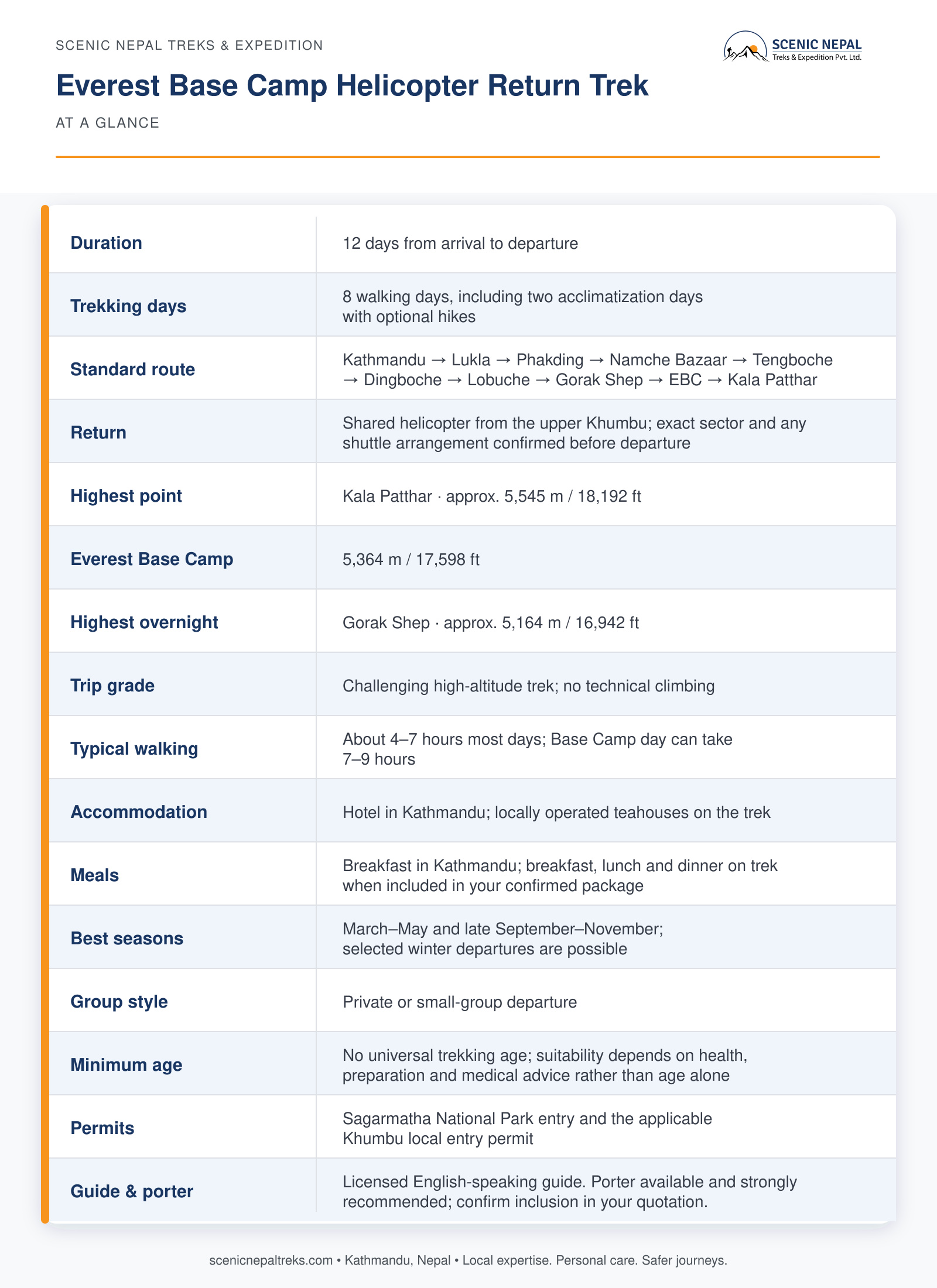
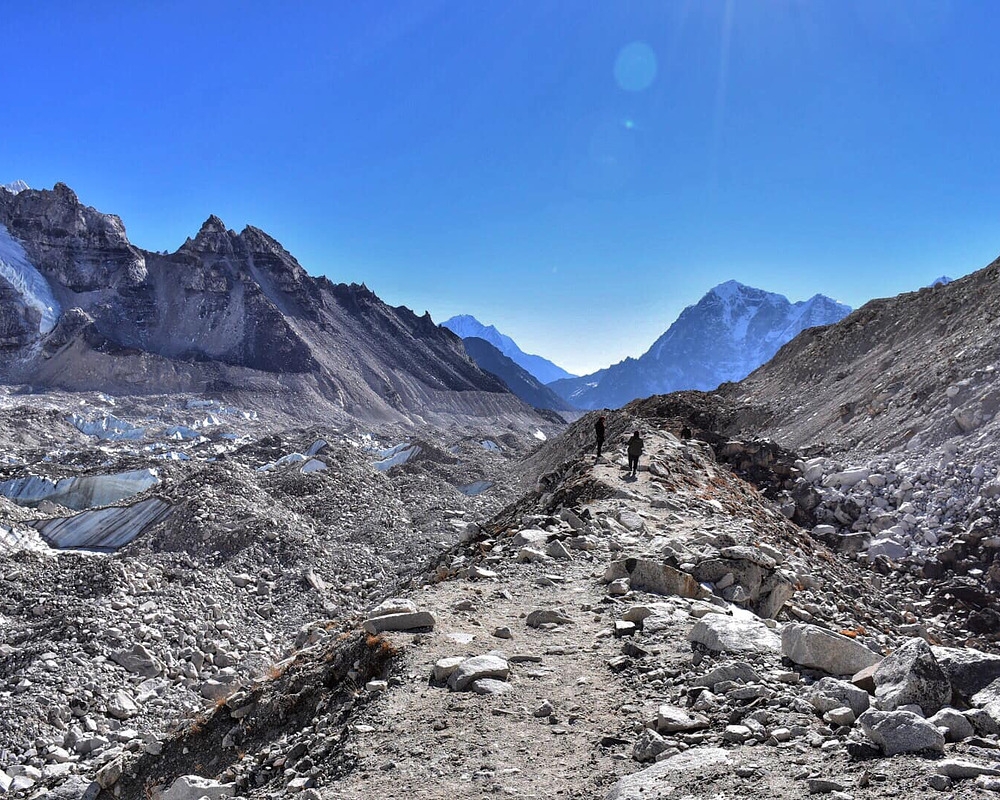
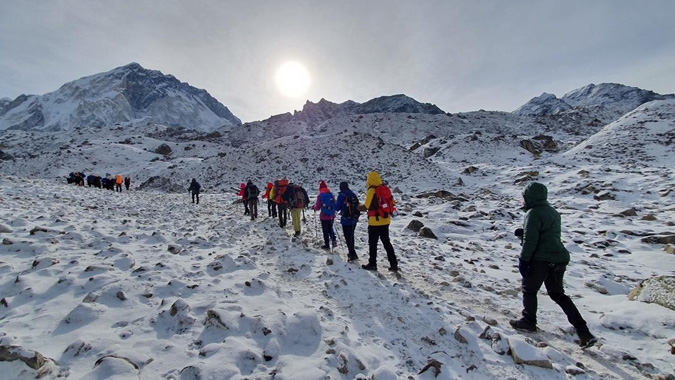
This is a challenging high-altitude trek, even though it involves no ropes, crampons or technical climbing on the standard trail. The difficulty comes from elevation, cold, basic accommodation, consecutive walking days and rough moraine near Base Camp.
Most days involve four to seven hours of walking. The Base Camp day can require seven to nine hours, and the optional Kala Patthar climb begins early in cold conditions. Above Dingboche, every movement feels slower because less oxygen is available.
Previous high-altitude experience is helpful but not compulsory. General fitness does not protect anyone completely from altitude illness. A fit runner can struggle with elevation while a slower walker acclimatizes well.
Who is this trek suitable for?
It may suit healthy, active travellers who can:
- Walk on hills for six or more hours with a light daypack;
- Climb and descend stairs without significant joint pain;
- Tolerate basic mountain facilities and cold bedrooms;
- Train consistently for at least eight to twelve weeks;
- Follow a guide’s pace and report symptoms honestly;
- Accept weather-related changes without a rigid schedule.
Age alone does not determine suitability. We have deliberately avoided promising that every traveller from 18 to 70 can complete the trek. Anyone with heart, lung, blood-pressure, neurological or mobility concerns—or any uncertainty about high-altitude travel—should seek individualized advice from a qualified medical professional before booking.
Fitness and Training Plan- Recommended weekly preparation
- Two or three aerobic sessions such as brisk walking, cycling, swimming or easy running
- One longer weekend hike, gradually building toward five to seven hours
- Two strength sessions emphasizing legs, calves, glutes and core
- Regular stair or hill climbing while carrying your expected daypack weight
- Balance and stability work for uneven terrain
- Recovery days, mobility and adequate sleep
Train in the boots you will use in Nepal. Test socks, rain layers, backpack fit, hydration system and trekking poles before departure. If you live in a flat region, stairs, an inclined treadmill and back-to-back long walks can partially simulate the cumulative effort, though they cannot reproduce altitude.
Altitude, Acclimatization and Safety
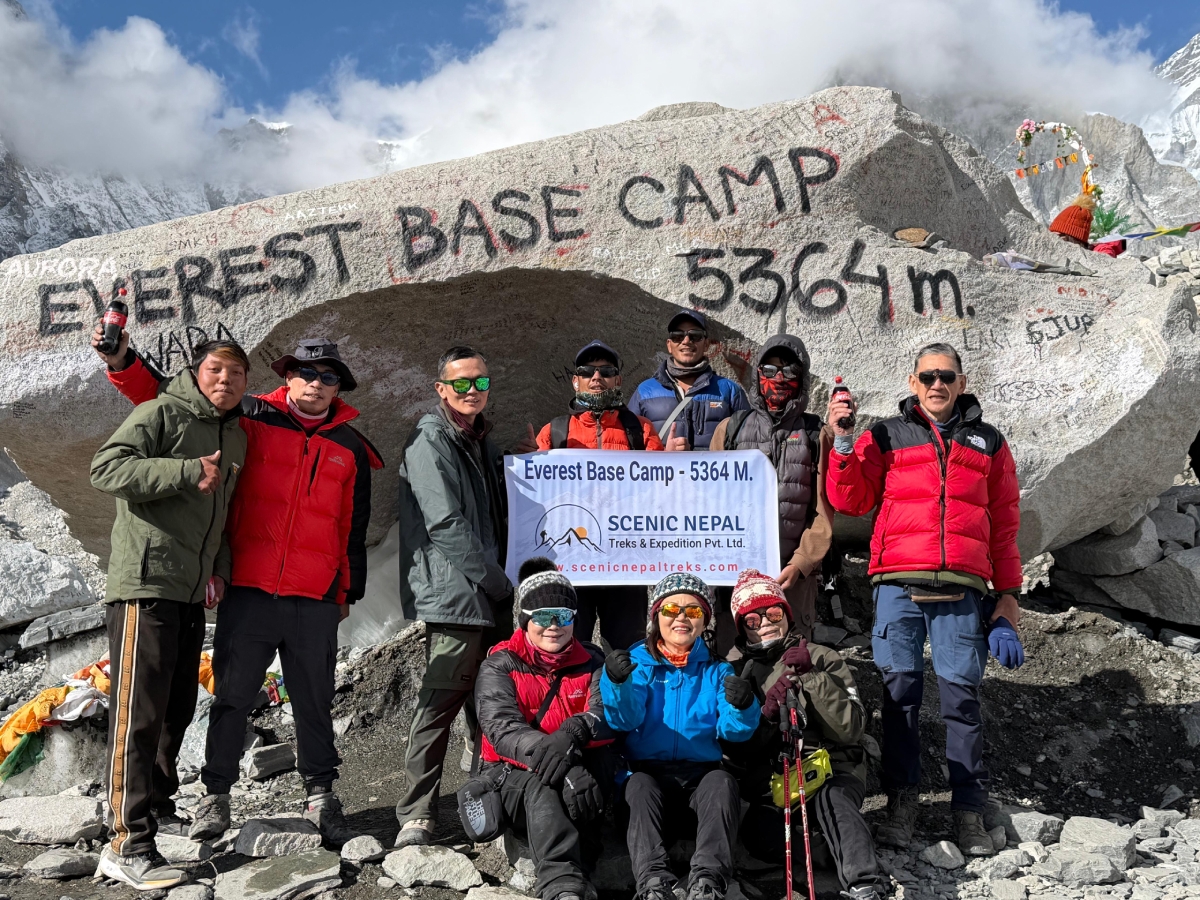
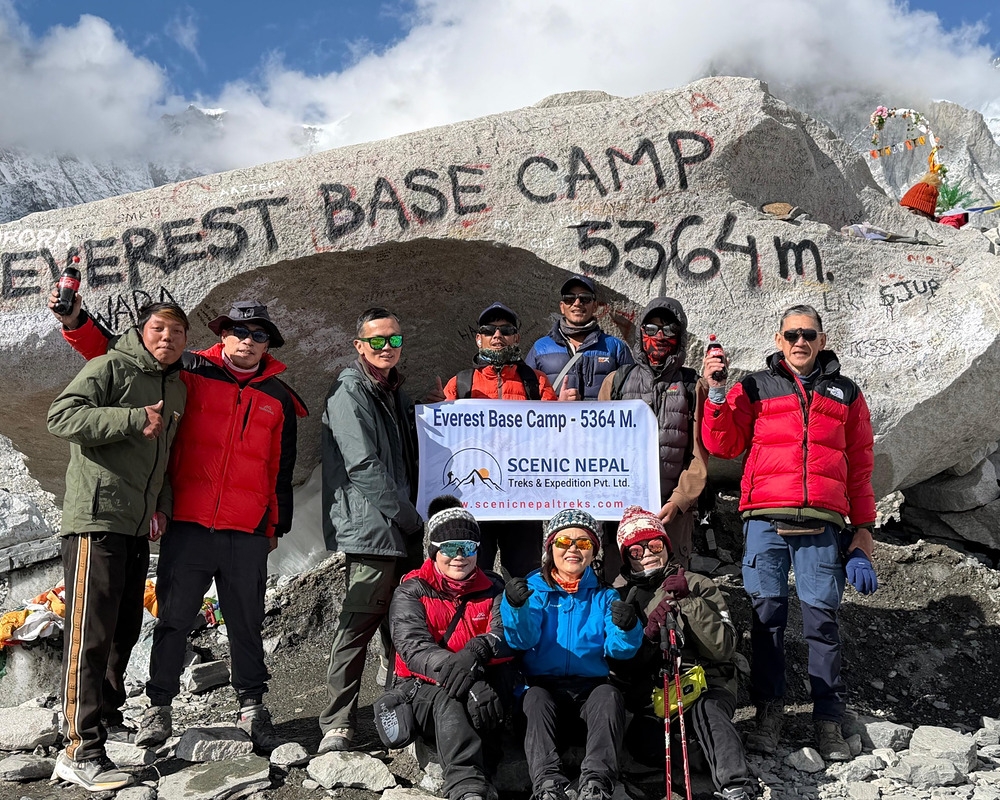
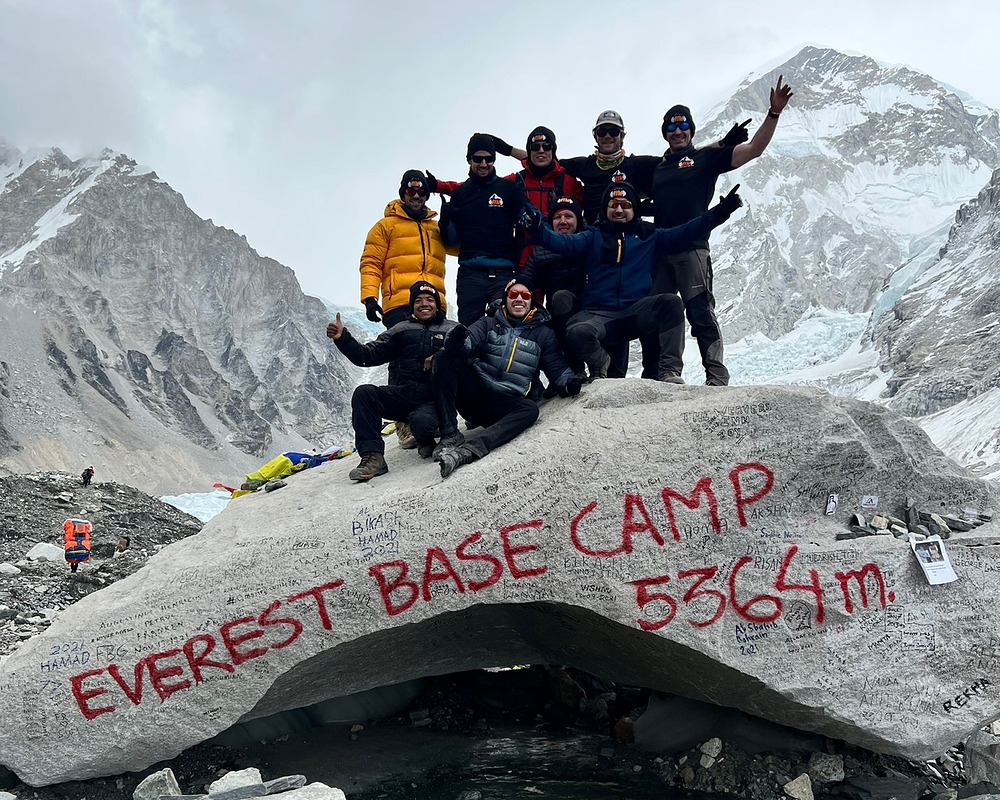
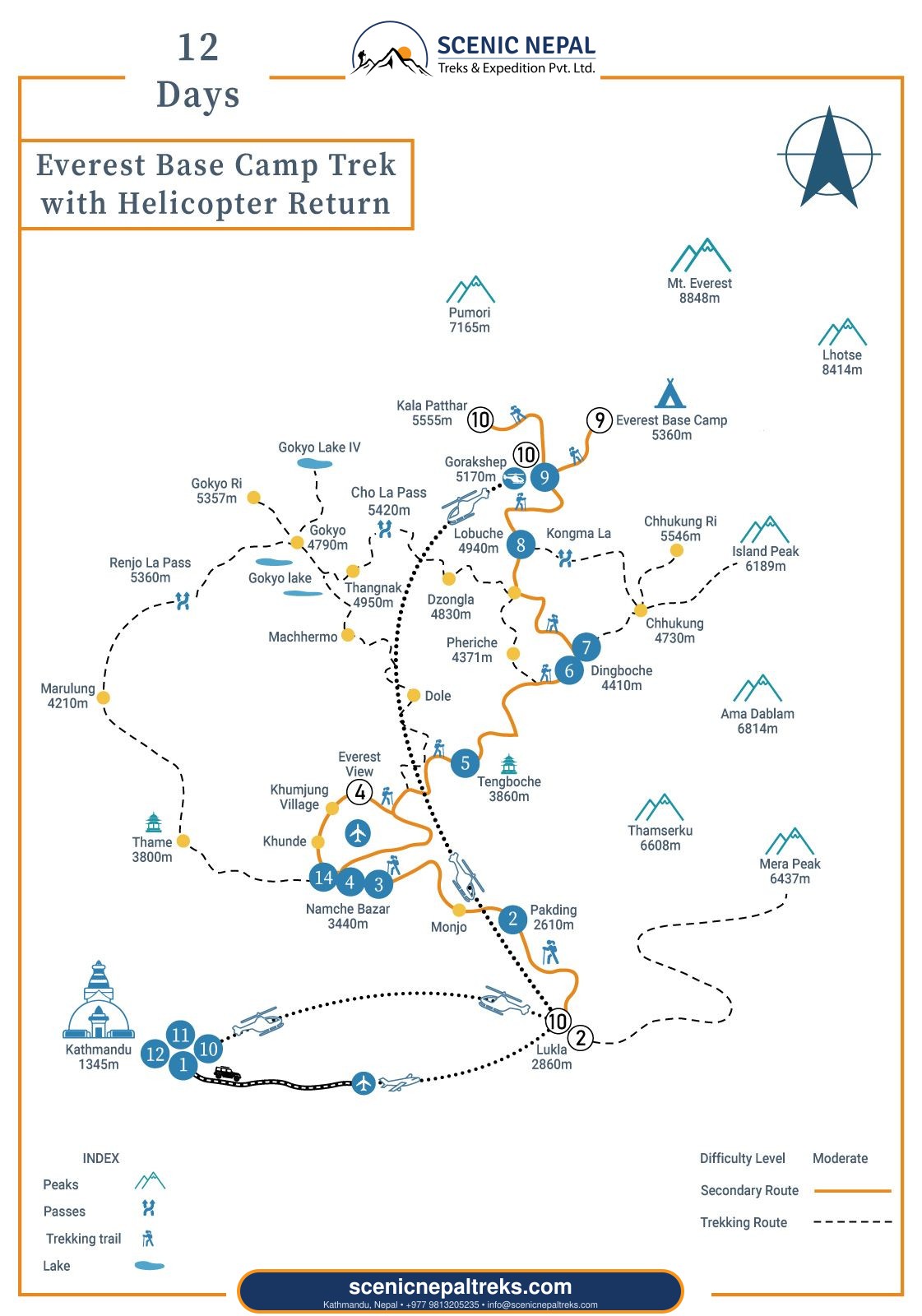
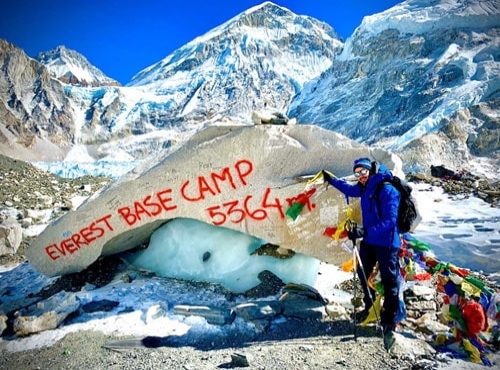
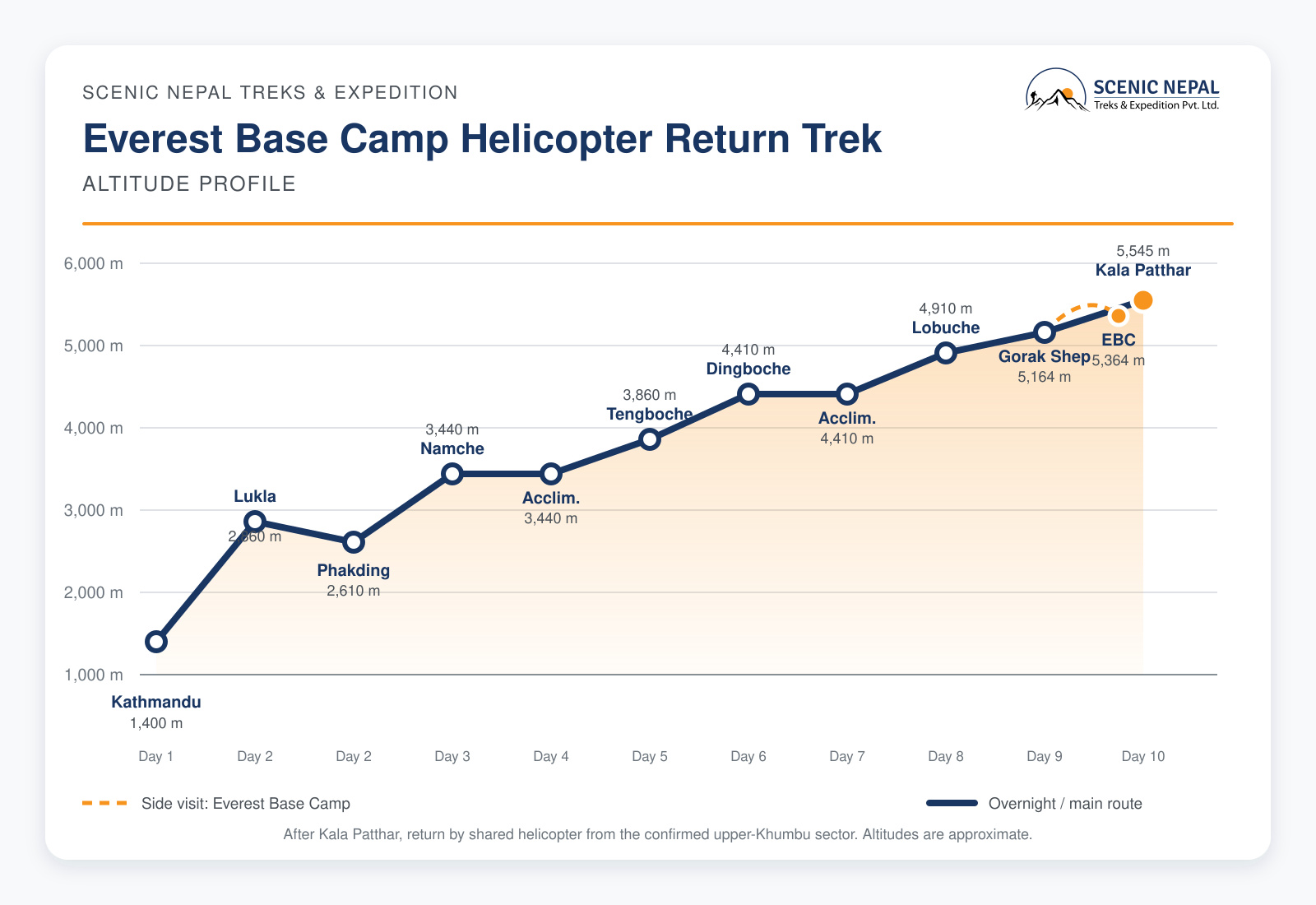
Everest Base Camp lies at 5,364 metres, and the itinerary’s highest optional point is Kala Patthar at approximately 5,545 metres. Gorak Shep is the highest overnight stop at about 5,164 metres.
Mild headache, reduced appetite, disturbed sleep and fatigue can occur at altitude, but symptoms must be discussed with your guide. Do not self-diagnose a serious symptom as “normal.” The core rules are simple:
- Ascend gradually;
- Keep the pace slow and steady;
- Eat even when appetite is reduced;
- Drink enough to avoid dehydration without forcing excessive water;
- Avoid alcohol while ascending;
- Never ascend to sleep higher when symptoms are worsening;
- Descend when indicated—descent is the definitive response to serious altitude illness.
Danger signs can include severe or worsening headache, repeated vomiting, confusion, loss of coordination, breathlessness at rest, a wet cough or rapid deterioration. These require immediate guide assessment and descent or evacuation as conditions demand.
Medication such as acetazolamide should be discussed with a medical professional who knows your history. Scenic Nepal Treks does not prescribe medication through website content, and travellers should not rely on a helicopter as their altitude-sickness plan.
Emergency response
Your guide’s first decision is based on the person’s condition, location, weather and available transport. Responses may include rest and reassessment, descent on foot, assistance by porter or pack animal where possible, treatment at a local clinic, or helicopter evacuation.
The scheduled helicopter return included in a package is not the same as an emergency rescue. Rescue flights require separate authorization and payment arrangements. Your travel insurance should cover trekking to at least 5,600 metres, emergency helicopter evacuation, medical treatment, trip interruption and cancellation. Carry the insurer’s 24-hour emergency number and policy details offline. We, Scenic Nepal Treks will be there anytime for your safety and support.
Weather and Temperatures
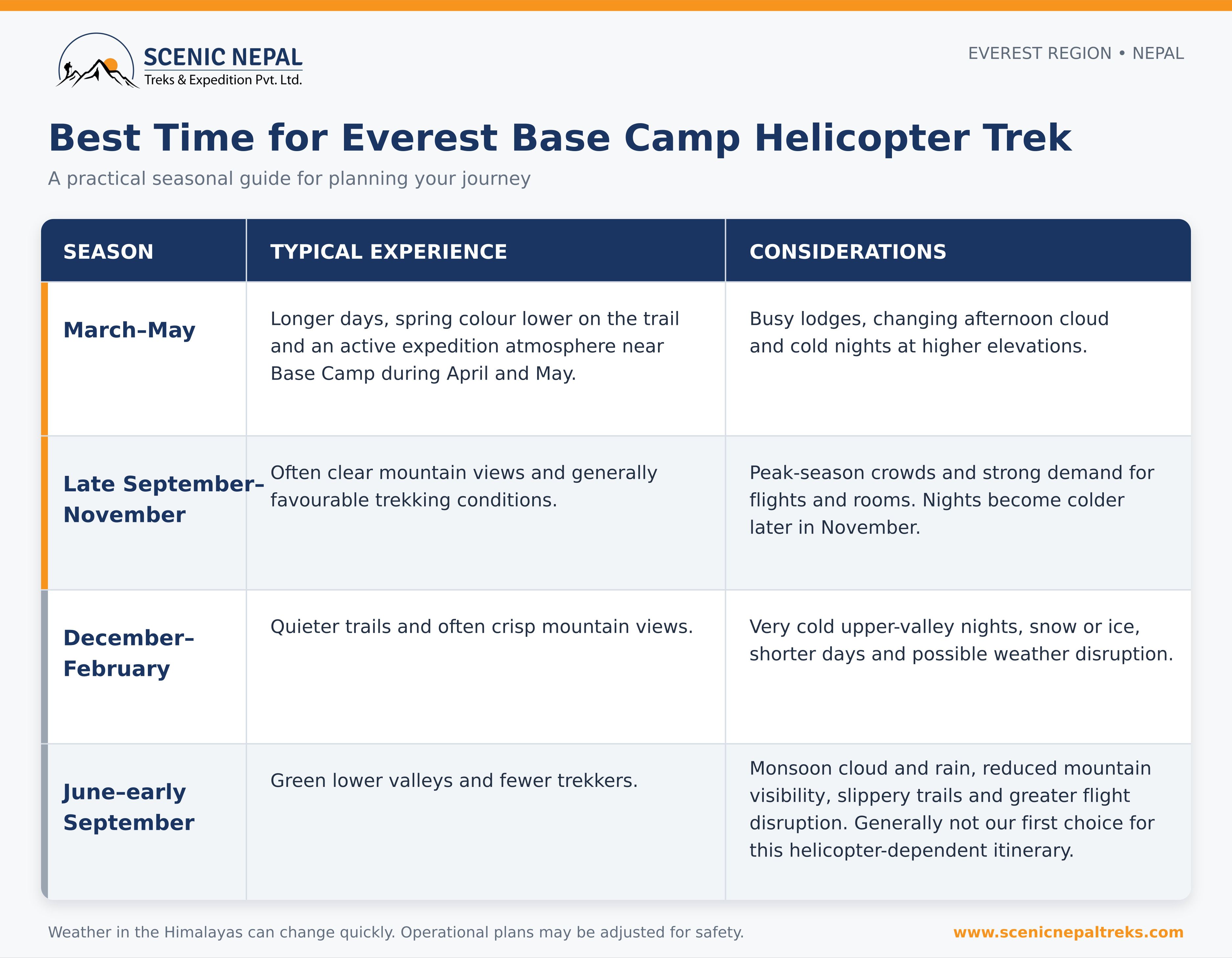
Temperatures change with elevation, sun, wind, season and local weather systems. Online tables are only planning ranges, not forecasts. In the sun, daytime walking can feel warm; once cloud or wind arrives, the perceived temperature drops quickly. Upper teahouse bedrooms are normally unheated and can fall below freezing at night.
Pack for a wide range rather than a single predicted number. Near Gorak Shep and Kala Patthar, sub-zero conditions are common in the main trekking seasons, particularly before sunrise, and winter can be considerably colder. Check a reliable mountain forecast shortly before departure, but let your guide make trail decisions based on conditions observed locally.
Accommodation on the Trek
- Kathmandu accommodation is provided in the hotel category confirmed in your quotation. On the trail, you stay in locally operated teahouses. Rooms usually contain two simple beds, mattresses, pillows and blankets. Bring or request a suitable sleeping bag because bedrooms are generally not heated.
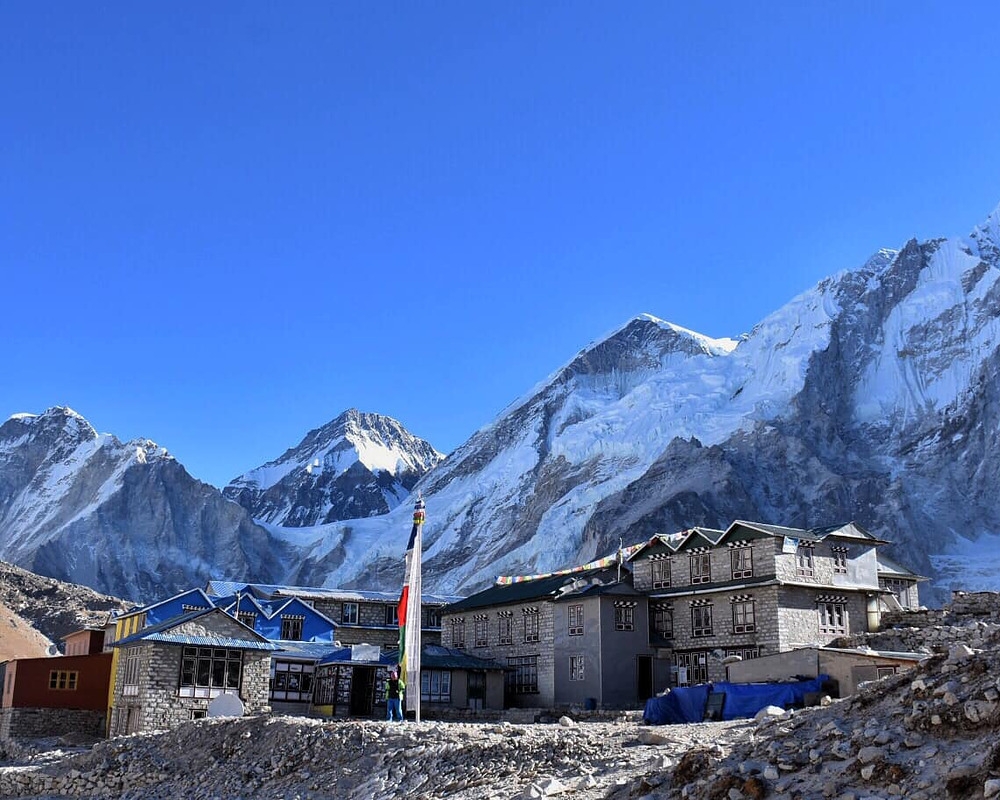
- 5 Nights Attached bathrooms are available in some lower villages in Phakding, Namche and Lukla. At Lobuche and Gorak Shep, rooms and toilets are basic, water can freeze and high demand may limit choice. Twin rooms are normally requested, but occasional room sharing may be unavoidable during peak periods or disruption.
- Dining rooms are the social centre of each lodge and are often warmed in the evening. Heating availability and fuel use vary. Avoid promising a fireplace or heated room at every stop.
Meals, Drinking Water and Food Safety
- Teahouse menus typically offer dal bhat, soups, noodles, potatoes, rice dishes, momos, pasta, eggs, porridge, pancakes and selected Western-style meals. Choices reduce and prices rise as supplies are carried farther into the mountains.
- Dal bhat is a practical trekking meal because it combines rice, lentils and vegetables and is usually prepared regularly. At high elevations, choose simple, freshly cooked food. We recommend limiting meat above Namche because refrigeration and transport can be inconsistent.
- Safe drinking water is available through boiled water purchased from lodges or locally sourced water treated with an effective filter or purification method. Single-use plastic bottles create avoidable waste and may not be available everywhere. Carry at least two reusable bottles or a bottle and hydration reservoir, plus a treatment method you know how to use.
- Do not repeat a fixed rule such as “everyone must drink four litres.” Fluid needs vary with body size, exertion and conditions, and excessive water can also be harmful. Drink regularly, monitor thirst and urine colour, and discuss concerns with your guide.
Toilets, Showers, Charging, Wi-Fi and Mobile Service
Facilities become simpler as altitude increases. Western-style flush toilets are common in some lower lodges, while squat or pour-flush toilets are also used. At high elevations, frozen plumbing can affect all systems.
Hot showers, device charging and Wi-Fi are usually paid extras. Prices tend to rise with altitude, and service may fail during bad weather or power shortages. Carry a power bank, spare camera batteries and offline copies of your passport, insurance, itinerary and emergency contacts. Mobile coverage exists in parts of the route but should never be treated as continuous.
Lukla Flights and Ramechhap Transfers
Lukla is a visual-flight-rules mountain airport, so cloud, wind and visibility can cause delays or cancellations. During busy trekking periods, many Lukla flights operate through Manthali Airport in Ramechhap rather than directly from Kathmandu. This normally requires a very early road transfer of roughly four to five hours each way, depending on road and traffic conditions.
Operations are determined seasonally and can change. We provide the expected flight origin before the trek and update guests if the airline or aviation authorities alter the plan.
Keep at least one buffer day in Kathmandu before your international departure. If a flight is cancelled, options may include waiting, adjusting the itinerary, travelling overland where practical or arranging a helicopter at additional cost.
Helicopter Operations: What Guests Should Know
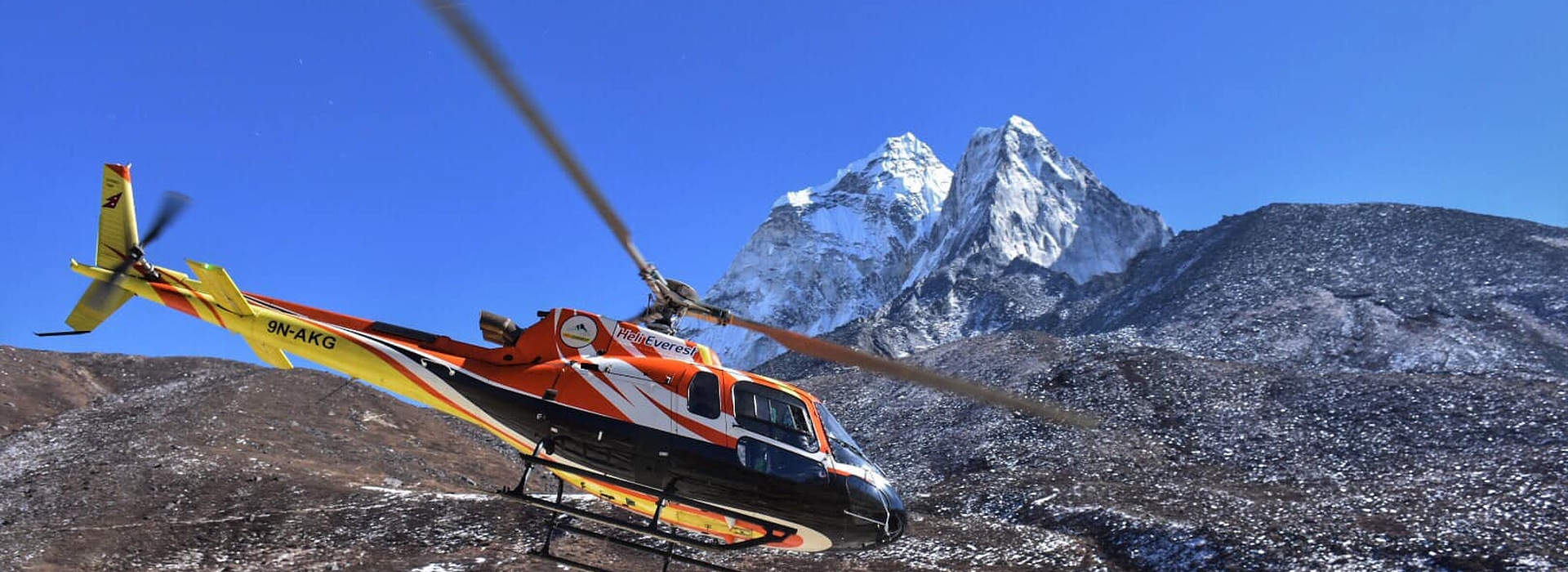
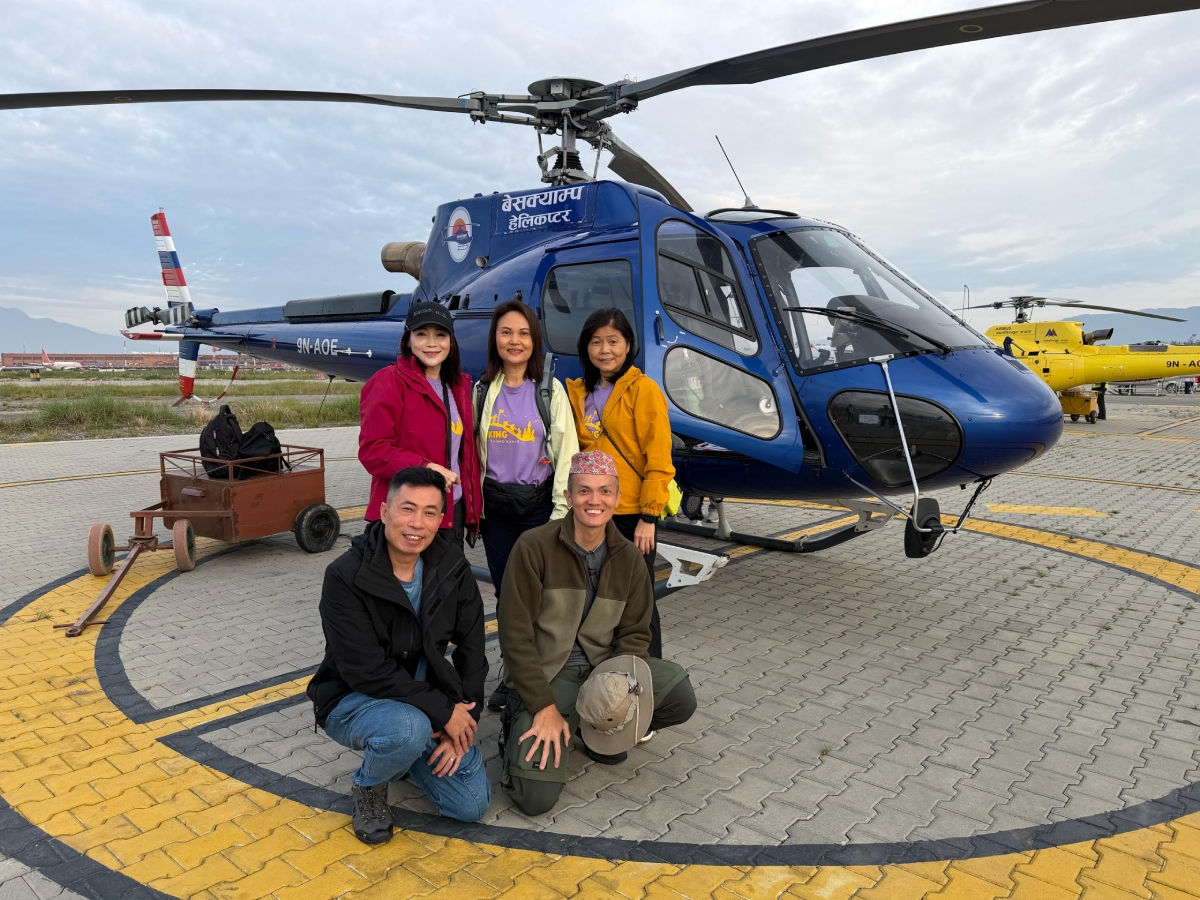
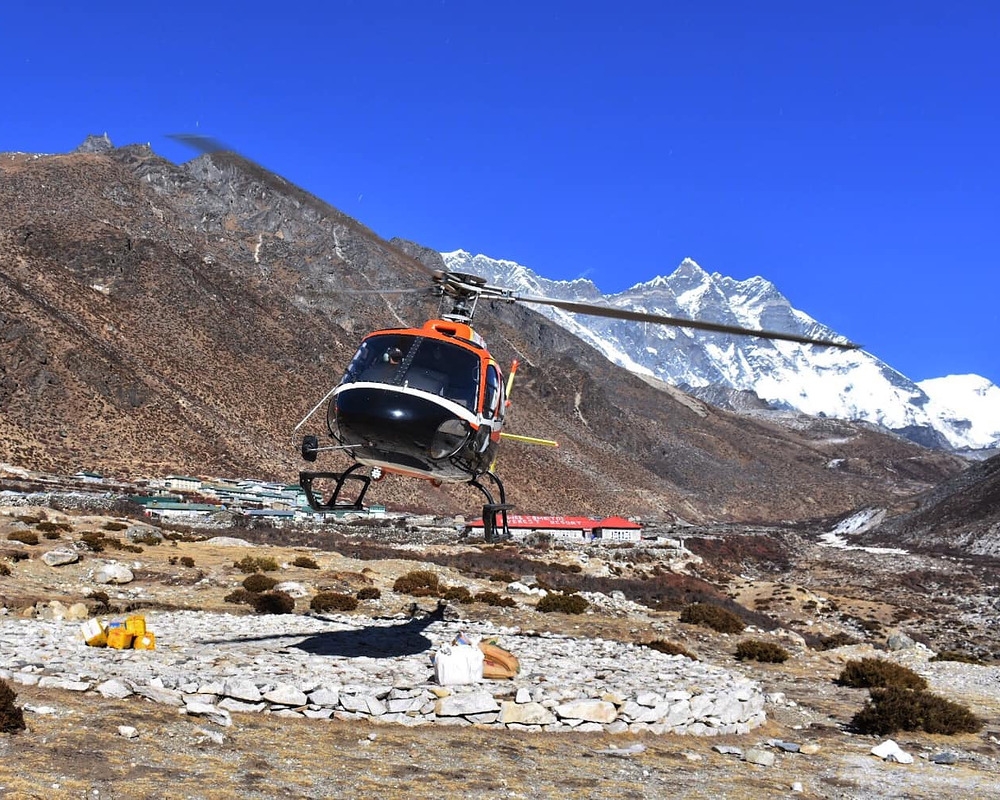
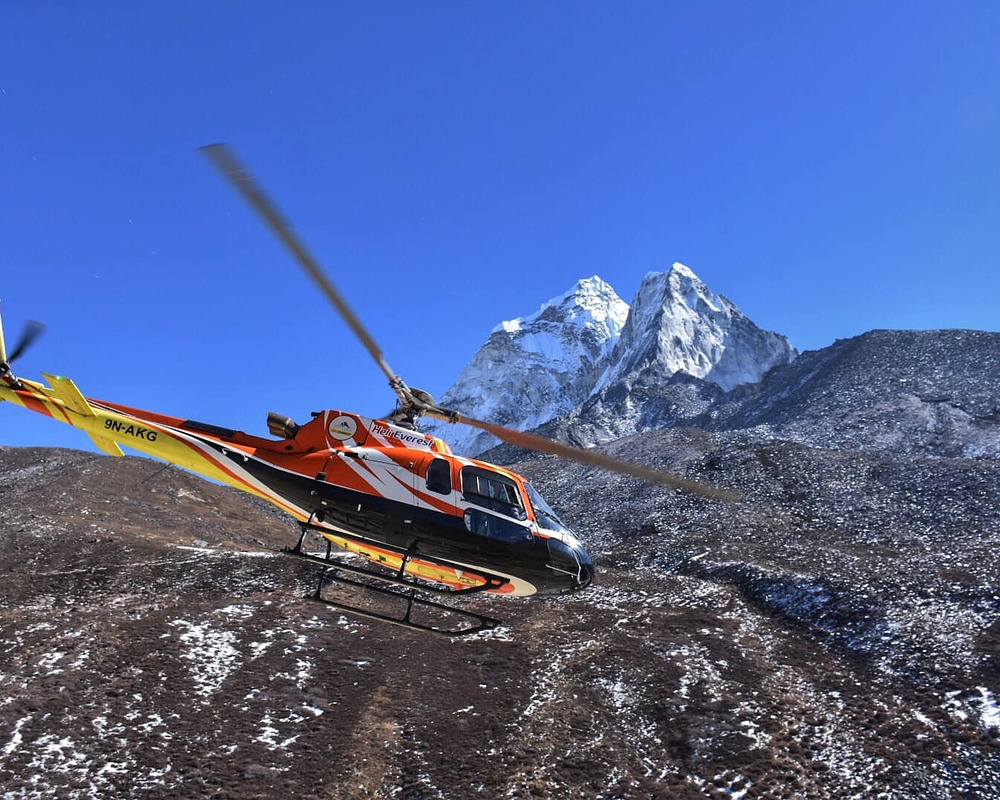
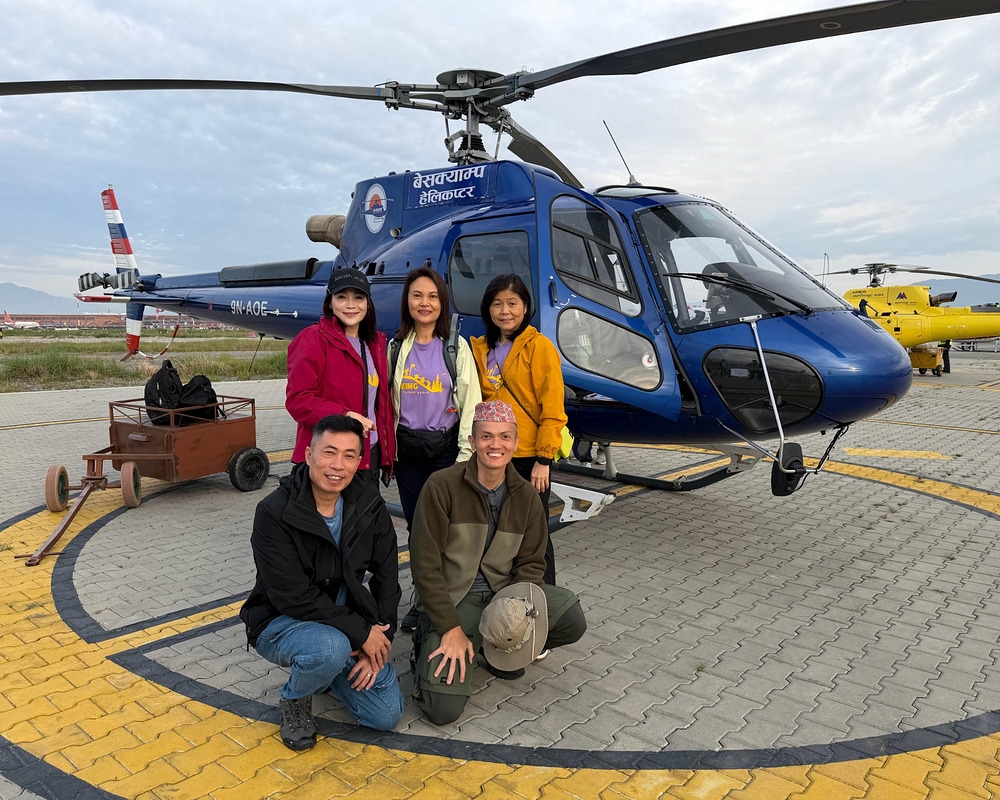
The words “direct helicopter return” can be misleading at high altitude. Helicopter payload decreases with elevation, temperature and operating conditions. At Gorak Shep, passengers may fly in small shuttle groups to a lower point, then join an onward aircraft. The pilot and operator control loading, seating, route, stops and final go/no-go decisions.
Soft duffel bags are easier to manage than hard suitcases. The operator may impose a lower baggage allowance than the Lukla plane. Scenic Nepal Treks confirms the applicable allowance, but passengers must be ready to separate essential hand luggage if loads are redistributed.
Weather delays do not automatically mean the journey is unsafe or badly organized. They are a normal constraint of Himalayan aviation. Responsible operators wait for acceptable conditions rather than pressure pilots to fly.
Packing List
Documents and money
- Passport and copies
- Nepal visa documentation as applicable
- Travel-insurance certificate and emergency contact details
- Flight details and emergency contacts stored offline
- Nepalese rupees for lodge extras and tips
- Payment card and reserve funds for genuine emergencies
Trekking clothing
- Broken-in waterproof trekking boots
- Lightweight camp shoes or sandals
- Moisture-wicking base layers
- Trekking trousers and optional thermal leggings
- Mid-layer fleece or light insulated jacket
- Warm down or synthetic insulated jacket
- Waterproof and windproof shell jacket
- Waterproof over-trousers
- Warm hat, sun hat and neck gaiter
- Liner gloves and insulated outer gloves
- Trekking socks and underwear
- Gaiters or microspikes when seasonal conditions justify them
Equipment
- 30–40 litre daypack with rain cover
- Soft trekking duffel for porter use
- Sleeping bag suitable for expected conditions
- Trekking poles
- Headlamp with spare batteries
- Sunglasses with strong UV protection
- Reusable water bottles or hydration system
- Water-filter or purification method
- Power bank and charging cables
- Sunscreen and lip protection
- Small personal first-aid and blister kit
- Toiletries, quick-dry towel and hand sanitizer
- Reusable waste bag
Personal health items
- Regular prescription medication in original packaging
- Personal pain relief and stomach medication approved by your clinician
- Any altitude medication discussed with your clinician
- Oral rehydration salts
- Blister dressings
- Personal hygiene products
Keep the final packing list season-specific. A December departure needs more insulation than an April trek, while monsoon-edge travel requires more attention to waterproofing.
Check our list for 2 weeks trek in Nepal
Porter Service and Baggage
A porter can substantially improve comfort and reduce cumulative fatigue, but you still carry your daypack with water, rainwear, warm layers, valuables, documents and personal medication.
Scenic Nepal Treks follows a standard of one porter for two trekkers ( Excluded for Solo hiker), carrying a combined guest load within the company’s confirmed ethical limit. Publish the precise allowance in kilograms and apply it consistently. Staff should receive fair pay, suitable equipment, meals, accommodation and insurance.
The Lukla aircraft and helicopter may use different baggage limits. The lower limit controls on the relevant sector. Leave non-trekking luggage securely at your Kathmandu hotel.
Responsible Trekking in the Khumbu
The Everest trail is a living region, not an outdoor theme park. Lodges, farms, monasteries and transport systems support local families. Travel respectfully:
- refill and treat water instead of buying unnecessary plastic bottles;
- carry batteries, wrappers and non-biodegradable personal waste back to Kathmandu;
- use toilets provided and follow park-waste instructions;
- ask before photographing people, ceremonies or private homes;
- walk clockwise around mani walls and chortens where local custom indicates;
- dress and behave respectfully in monasteries;
- conserve hot water and electricity, both of which are costly at altitude;
- avoid drones unless all national, park, local and aviation permissions have been obtained;
- do not pressure guides, porters or pilots to continue in unsafe conditions.
Choosing a locally based company keeps operational knowledge and a greater share of trip value in Nepal. It also gives you direct access to the team responsible for your permits, staff, lodges and aviation arrangements.
Why Trek with Scenic Nepal Treks?
Scenic Nepal Treks & Expedition is a locally owned company based in Kathmandu. Our role is not simply to sell a route; it is to coordinate the many details that make the route workable—permits, domestic flights, local staff, teahouses, changing weather plans and helicopter communication.
Our approach includes:
- locally informed trip planning and direct support in Nepal;
- licensed, experienced guides and insured trekking staff;
- a two-acclimatization-day itinerary designed for responsible pacing;
- private and small-group options;
- clear discussion of helicopter sectors, weight restrictions and weather limitations;
- itinerary customization without removing essential safety margins;
- practical guidance before arrival and throughout the trek.
- available 24/7 for your safety and help